
Lessons learned from storm-damaged trees and how proactive planning can protect your estate, hotel grounds, or parkland. The importance of tree safety.
Ireland’s storm season has been more intense than usual this year, with nine named storms already recorded in 2023/24 (storm season in Ireland starts September to the end of August each year). Storm Éowyn was one of the strongest yet—bringing damaging winds, fallen trees, and widespread disruption.
But beyond the broken branches and blocked paths lies a bigger question: how prepared are we when it comes to tree safety?
At Holly Arboriculture, we believe the time to act is before the storm hits. Here’s what we saw on the ground in Dunsany Castle—and why tree safety should be a priority for estates, hotels, parks, and anywhere that has a duty of care for trees and people.
Increased storm activity has highlighted the urgent need for better tree safety planning. Here’s what we learned from Storm Éowyn—and how to prepare for what’s next.
A Walkthrough After the Storm
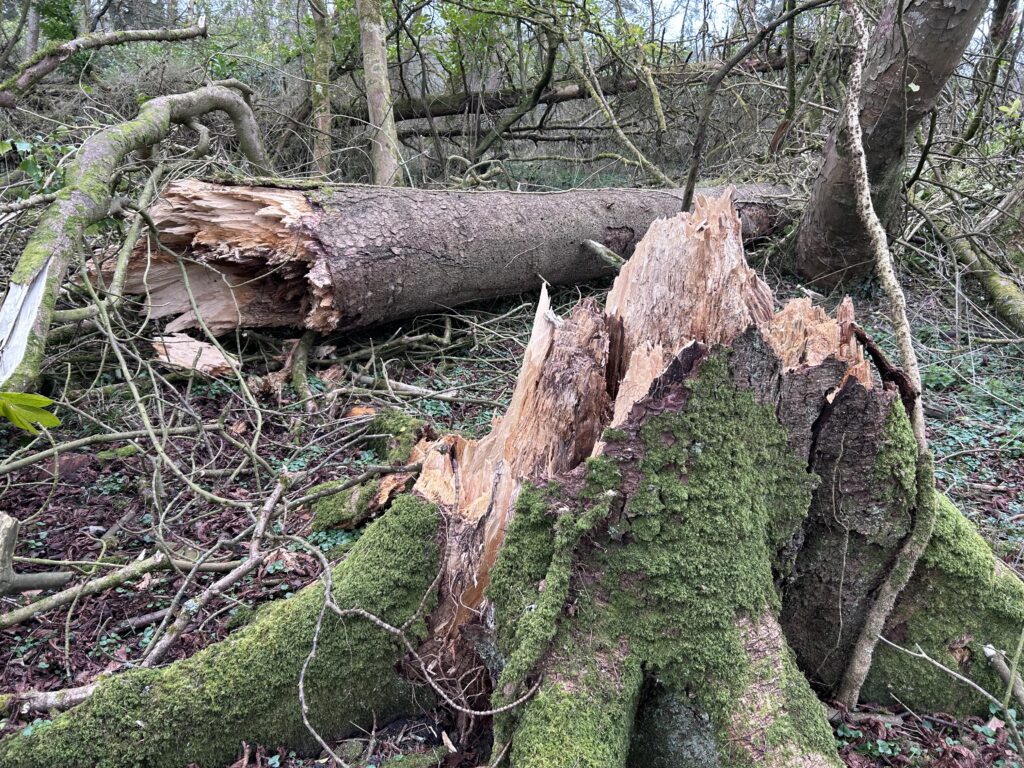
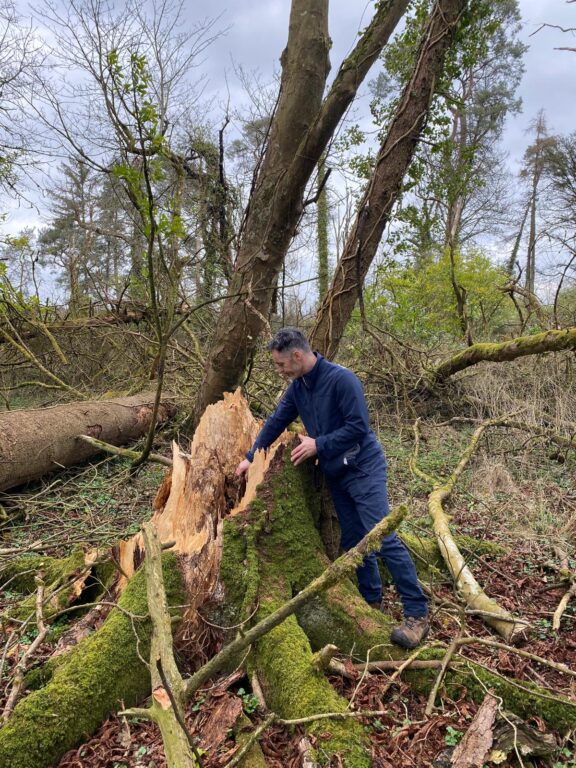
Just days after Storm Éowyn passed, Paul Holly our senior arboricultural consultant joined Bob Hamilton from Irish Trees.ie for a site walk in the historic Dunsany Estate in Co. Meath, Ireland. The damage was clear: several mature trees had been brought down by the wind—some of them decades old.
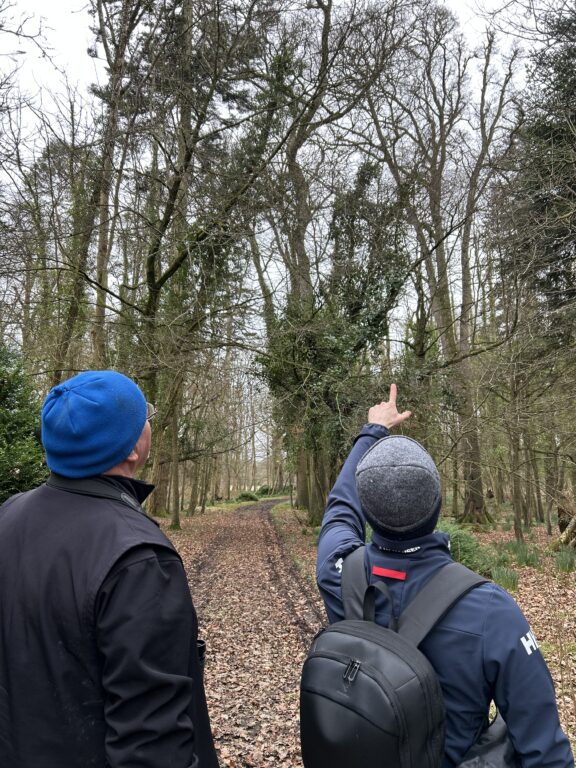
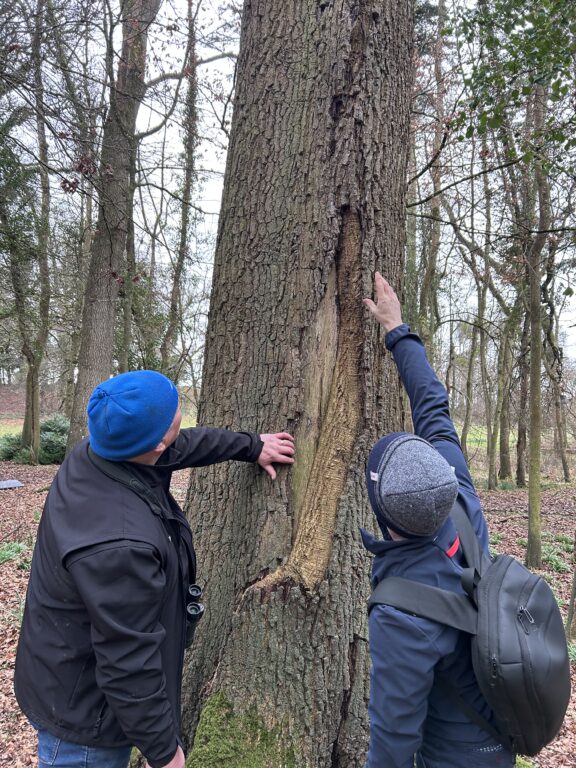
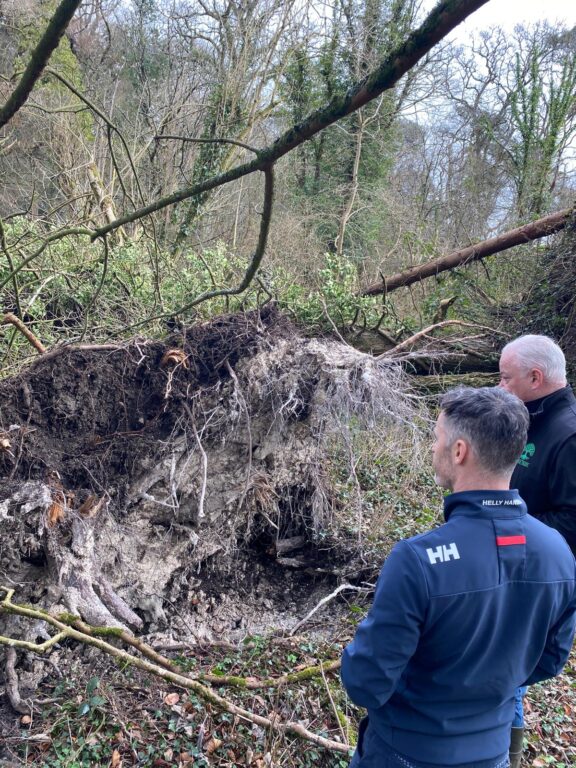
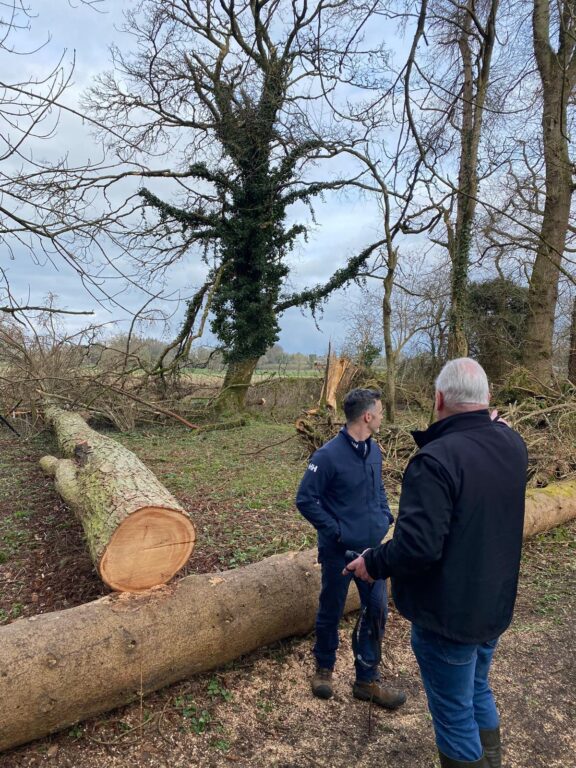
It’s always difficult to see old trees fall. Many of these had stood through countless seasons, offering shade, beauty, and habitat. Their sudden collapse is a reminder of how vulnerable even the strongest trees can be when extreme weather strikes.
If you’re dealing with storm damage, you may find our Post-Storm Tree Care Guide for Facilities Managers and Groundskeepers helpful.
The Role of Nature: Biodiversity Through Decay
While a fallen tree can look like a loss, it’s also the start of something new. Trees that come down in storms don’t go to waste. They break down slowly, returning nutrients to the soil, feeding fungi, insects, and small mammals, and supporting biodiversity in the woodland ecosystem.
So yes—nature is resilient. But that doesn’t mean we should leave things to chance.
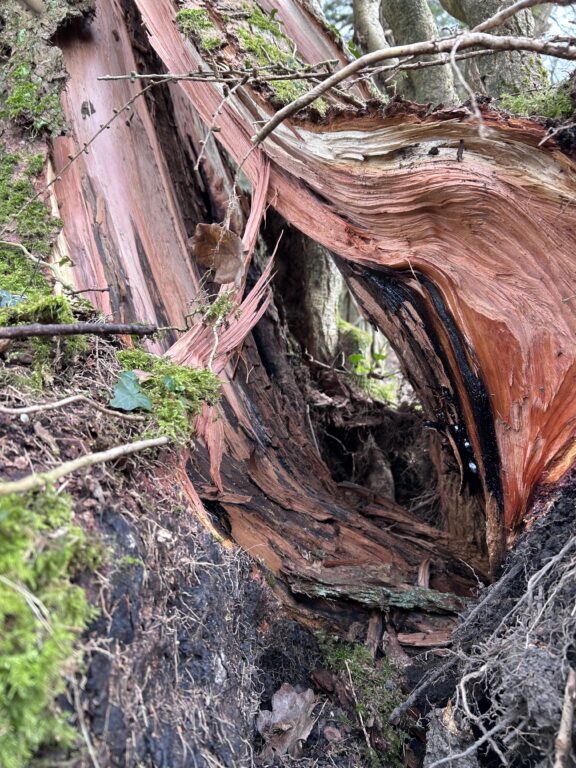
Tree Safety: What It Really Means
Tree safety isn’t just about removing hazards after a storm. It’s about managing risk in advance, knowing which trees are vulnerable, and taking thoughtful action to reduce the likelihood of failure.
At Holly Arboriculture, we specialise in tree risk management strategies for landscapes. Our work includes:
- Tree safety inspections for hotels, estates, schools, and parks
- Use of advanced equipment like decay detection technology
- Clear reports with practical recommendations
- Long-term management plans tailored to each site
We’ve seen the cost—financial and environmental—of waiting until it’s too late. That’s why prevention, not reaction, is the approach we recommend.Proactive tree safety planning is key.
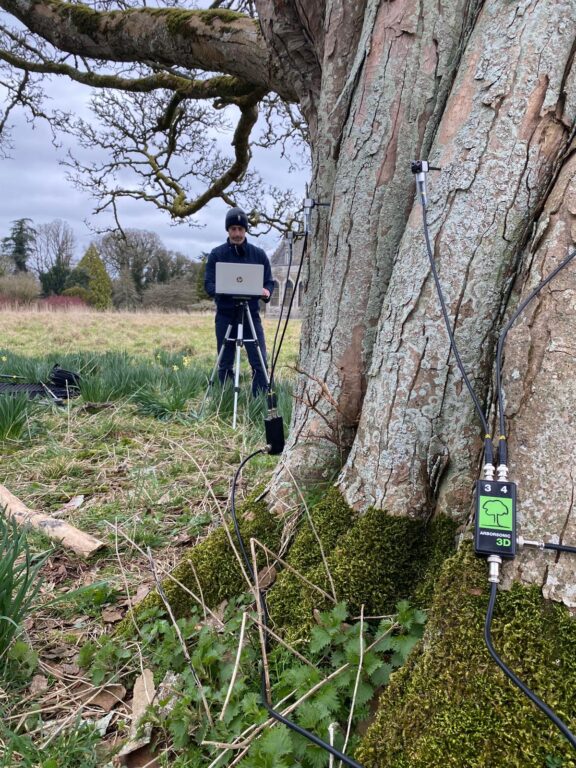
Paul Holly using the Arborsonic 3D Acoustic Tomograph to assess internal tree decay during a site inspection in Dunsany Estate in collaboration with Irish Trees.ie.
We are hosting a Tree Risk Management Webinar where we will share practical steps for tree owners, health and safety officers, and site managers. If you want to learn more, join us.
Who Needs Tree Safety Services?
If your property has a number of trees and people frequently on site, then tree safety is not just good practice—it’s a responsibility.
This includes:
-
Private estates and historic properties
-
Hotels and guesthouses with landscaped grounds
-
Parks and public gardens
-
Golf courses and recreational venues
-
Schools and campuses
A falling tree can cause serious injury, damage property, and create legal liability. But with the right assessments in place, most of these incidents are preventable. Regular tree risk assessment is very beneficial.
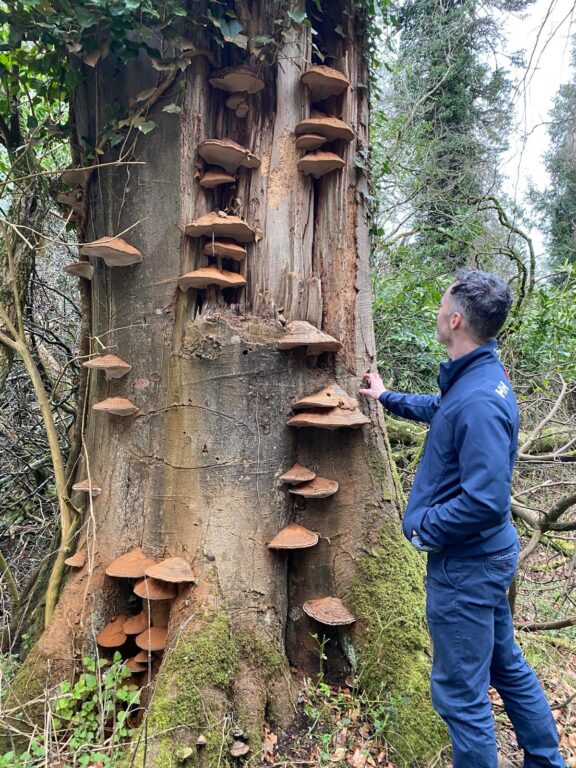
Whether you’re concerned about a single tree or a full estate, we offer expert guidance to help you manage risk effectively and sustainably. We work closely with landowners, estate managers, architects, and local authorities to build trust, offer clarity, and protect both people and trees.
Storm Éowyn won’t be the last. With climate change bringing more extreme weather to Ireland, now is the time to put a tree safety strategy in place.
Based in Cork, we work across the south of Ireland and beyond. Ready to put a tree safety plan in place? Contact Holly Arboriculture today.